
Why Change Efforts Fail Before the Technology Even Starts
The Conversations Leaders Forget to Design
Most organizational change efforts don’t fail because of poor strategy or weak technology. They fail much earlier in the conversations leaders have (or don’t have). In my research on leadership conversations during transformation, one insight became very clear: change is not implemented, it is influenced through conversation. And yet, this is the part leaders often leave to chance.
The Hidden Risk in Change Leadership
Most organizational change efforts don’t fail because of poor strategy or weak technology. They fail much earlier in the conversations leaders have (or don’t have). In my research on leadership conversations during transformation, one insight became very clear: change is not implemented, it is influenced through conversation. And yet, this is the part leaders often leave to chance.
Two Questions That Could Change Everything
In my work, I often introduce a simple but powerful shift using the Dual-Lens Framework. As a refresher, this framework helps leaders become more intentional about how their conversations shape change. The idea is simple: when we pay attention to both the strategic purpose of a conversation and our internal experience while leading it, we become much more effective leaders of change.
The Dual Lens Framework helps leaders hold two perspectives at once……what the conversation is trying to achieve and how people are experiencing it.
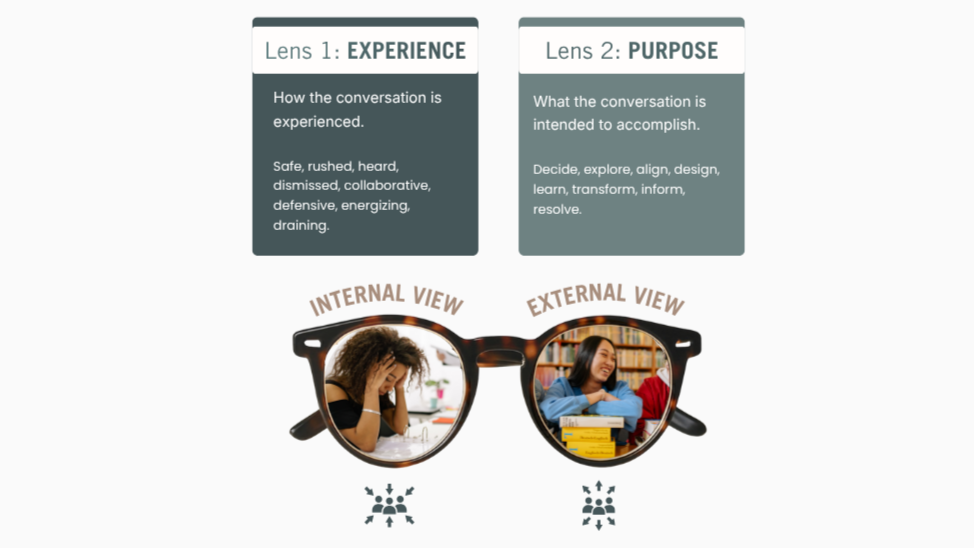
Most leaders focus almost entirely on function, leading with “I need to explain the plan,” or “I need to communicate the urgency of this initiative,” and “I need to clarify expectations.”
But research and practice both show that experience determines whether the message lands at all.
What This Looks Like in Practice

Leader Intention
Provide clarity
Create urgency
Explain decisions

Team Experience
Feeling excluded
Feeling pressured
Feeling unheard
A Lesson from Practice: The Importance of the Messenger
Research shows that who delivers the message matters as much as the message itself. Employees are far more likely to trust and act on change when the messenger is credible, the message is consistent and the conversation feels relevant to their reality
In fact, frontline leaders are often seen as the most trusted source of change communication, not senior executives. This reinforces a key point that change is not driven by announcements, it is enabled through trusted, ongoing conversations.
A Real-World Example
Imagine a Dean introducing workload changes tied to a new university or college program. The intention of the conversation is to reduce uncertainty, provide transparency and create alignment with this new program.
However, the experience from faculty might be a rushed delivery, a defensive tone and a limited opportunity for dialogue.
What do you think the result might be from this conversation, fewer questions, more tension? Concerns that never surface? The issue isn’t the decision with this new program. It’s the design of the conversation.
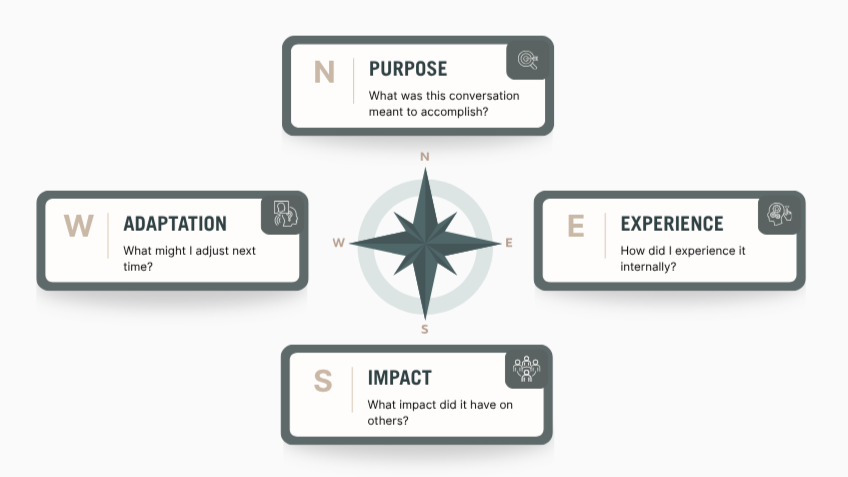
A Practical Tool: The Conversation Reflection Compass
One of the simplest ways to strengthen leadership conversations is through reflection. As a leader, try this sequence of questions after any important interaction:
Your Leadership Shift
Effective change leadership requires a subtle but powerful shift: From delivering messages to designing conversations, and from communicating decisions to shaping meaning, from managing resistance to learning from it. When leaders pay attention to how conversations are experienced, alignment grows, trust strengthens, and resistance becomes insight.
A Final Thought
Every transformation is built on thousands of small conversations. Plans set direction. Technology enables possibility. But conversations determine whether change actually happens. And the leaders who learn to design those conversations, intentionally, thoughtfully, and consistently, are the ones who make change real.
